
The quick answer
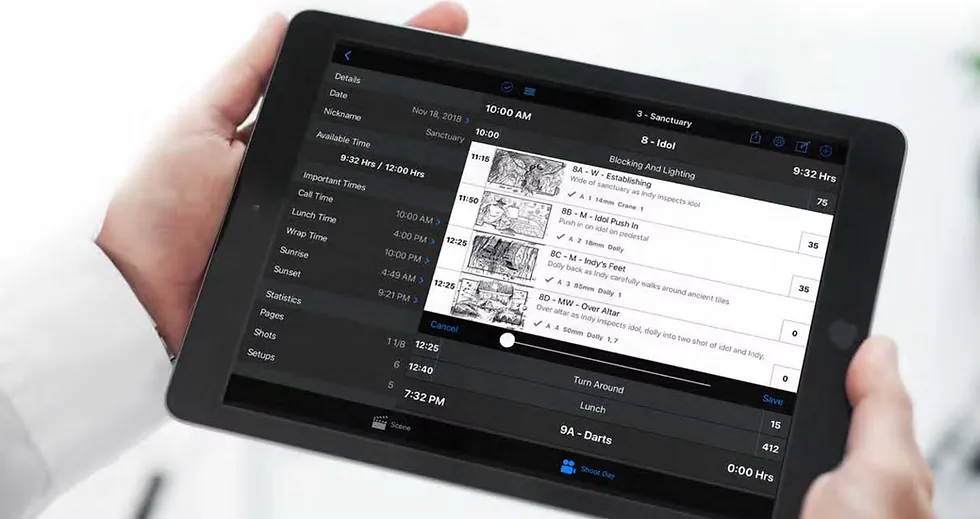
Build the shot list from the schedule backward: scene number, setup, shot size, angle, movement, subject, lens or support gear, sound notes, estimated setup time, and priority. Mark must-have shots separately from nice-to-haves so the AD and director know what can be cut when the day gets tight.
A weak shot list looks creative in the room and becomes vague on set. The crew can see the frame idea, but nobody can tell how long the setup takes, which lens change is next, whether sound is covered, or which insert can wait until the actor is released.
A useful shot list is different. It turns the director’s visual plan into a working document the 1st AD, DP, camera team, grip and electric, sound, art, and production can all use under pressure.
For a small crew, the goal is not to fill every possible column. The goal is to record the details that change time, gear, people, and location movement before those details become delays.
The best shot list is not the longest one. It is the one that tells the next department what to prepare before anyone has to ask.
Watch the workflow
How to make a shot list as a pro photographer (don’t skip these steps)
Making a shot list is easy, actually! If you've ever had a client ask, "What should our shot list have on it?" then I've got your ...
Start with scenes, setups, and the real shooting order
Begin with scene numbers because they connect the shot list to the script breakdown, schedule, call sheet, and sides. If the numbering does not match the other production documents, every later conversation becomes slower.
Then separate shots by setup, not just by story order. A setup changes when the camera position, lens, support gear, lighting direction, or major sound condition changes. Grouping shots this way lets the AD and DP see when the crew can stay put and when the whole machine has to move.
- ▸List the scene number and short scene description before naming individual shots.
- ▸Reset shot numbers inside each setup so the crew can track progress quickly.
- ▸Group coverage by location, camera position, lens family, and lighting direction whenever story continuity allows.
- ▸Add a priority mark for must-have, strong backup, and nice-to-have shots before the day starts.
Write shots with enough detail for departments to act
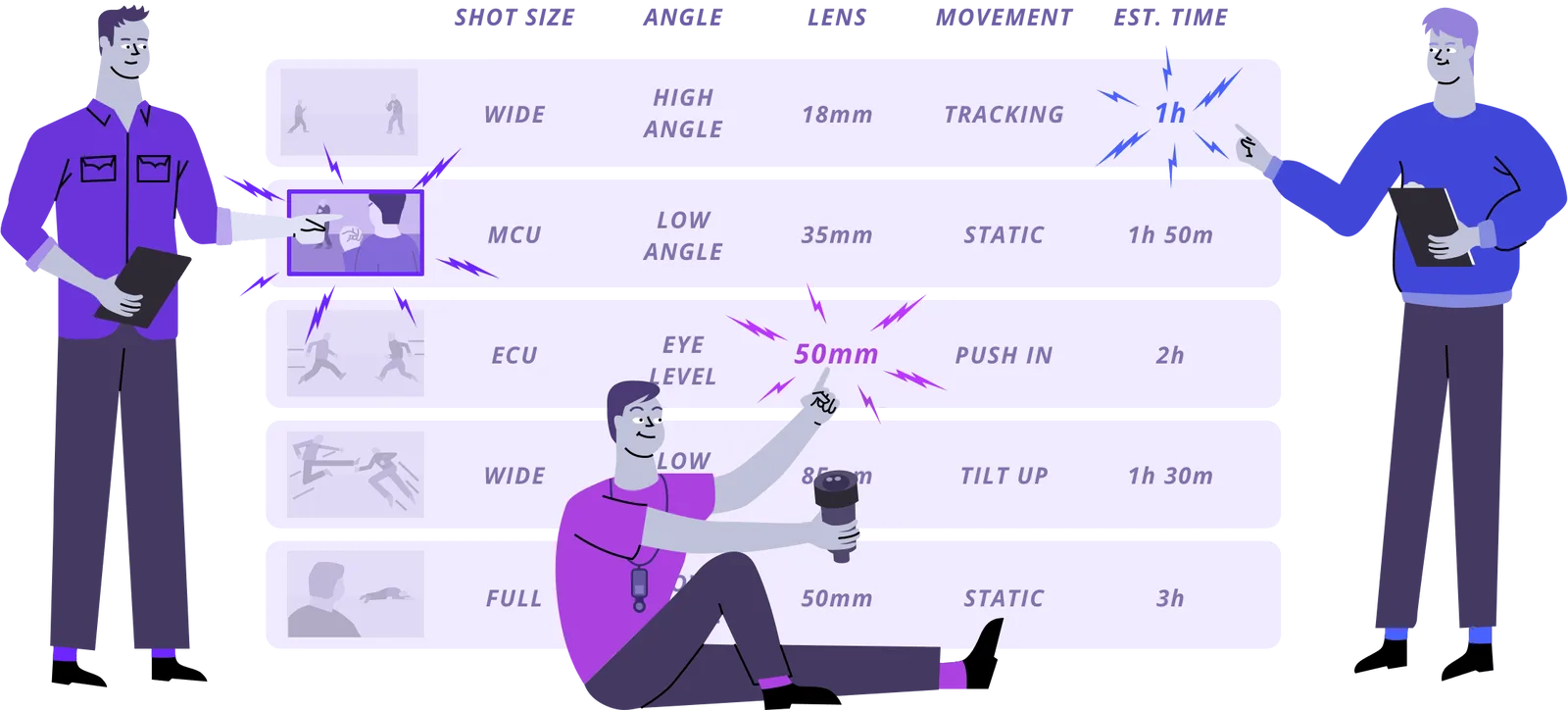
Shot size, angle, movement, and subject are the minimum details most crews need. A line that only says ‘close-up’ is still incomplete if nobody knows whose close-up, whether it is handheld, whether the camera pushes in, or whether a prop insert needs to be reset between takes.
Use plain, direct descriptions. The director can keep private visual references elsewhere, but the working shot list should help departments prepare: camera knows the lens and support, grip knows the move, sound knows whether dialogue matters, and art knows which object must be ready for the frame.
- ▸Include shot size such as wide, medium, close-up, insert, over-the-shoulder, or establishing shot.
- ▸Name the angle or camera relationship: eye-level, low angle, high angle, profile, POV, clean single, or dirty over.
- ▸Call out movement only when it affects time or gear: dolly, push-in, pan, tilt, handheld walk, slider, crane, drone, or locked-off.
- ▸Write the subject clearly, especially for inserts, props, background action, VFX plates, and shots without principal actors.
Add gear, sound, and time before the schedule is locked
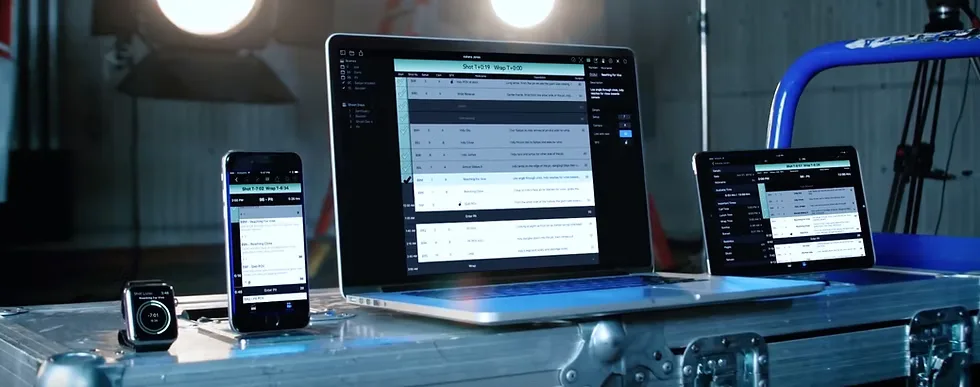
The biggest practical lesson is that a shot list becomes more useful when it carries the information that affects production time. Lens changes, camera support, special equipment, frame rate, sound coverage, lighting notes, and setup estimates are not decoration; they are the signals that keep the schedule honest.
On a low-budget shoot, do not pretend every shot takes the same amount of time. A locked-off insert may take minutes. A dolly move with lighting changes, focus marks, background action, and usable dialogue can eat a chunk of the day. Estimating that difference early gives the team a chance to simplify before call time.
- ▸Add camera support notes such as tripod, handheld rig, dolly, slider, jib, drone, car mount, or specialty housing.
- ▸Flag lens or frame-rate choices that require prep, testing, or extra time from camera and lighting.
- ▸Mark MOS, boom, lav, playback, wild lines, or tricky location sound so the sound team is not surprised.
- ▸Estimate setup time and shoot time separately; then add padding for resets, company moves, meals, and weather holds.
Protect inserts and nice-to-haves with a real plan
Insert shots are often easy to move around, but that does not mean they should be ignored. Props, hands, phones, letters, food, screens, weapons, and practical effects need continuity. If they are not listed clearly, they become the thing everyone remembers after the location is wrapped.
Nice-to-have shots also need honesty. Mark them before production, not during the panic. If time collapses, the AD can protect the story-critical coverage first and move optional texture shots to a pickup pocket, second-unit moment, or simpler version.
- ▸Keep a separate insert pocket for shots that can be captured while actors, lighting, or sound are resetting.
- ▸Mark any insert that requires continuity photos, duplicate props, screen graphics, blood/makeup reset, or legal clearance.
- ▸Agree on cut rules with the director and DP: what disappears first if the day falls behind by 30, 60, or 90 minutes.
- ▸After each setup, mark completed shots immediately so the team does not discover missing coverage at wrap.
Frequently asked
What should be included in a basic film shot list?
A basic shot list should include scene number, shot number, shot size, angle, movement, subject, short description, location or setup, equipment notes, sound notes, estimated time, and priority. If the crew can tell what to prepare next from the row, the list is doing its job.
How detailed should an indie film shot list be?
It should be detailed where details change time, people, or gear. A small drama scene may only need shot size, angle, subject, and priority. A move involving dolly track, specialty lens, playback, VFX, or location sound needs more notes because departments must prep before the camera is ready.
Should shots be listed in script order or shooting order?
Draft them from the script first, then reorganize them into shooting order by setup, location, light, actors, and gear. Script order helps coverage planning; shooting order helps the crew survive the day.
Why mark nice-to-have shots before the shoot?
Because the crew needs a cut plan before time gets emotional. If nice-to-haves are marked clearly, the AD can protect essential story coverage and still save optional inserts, transitions, or style shots when the day allows.