
The quick answer
A film call sheet works when it answers the questions people have before they text the AD: when do I arrive, where do I park, what scenes are up, who is needed, what changed, and which version is final.
A bad call sheet does not fail because the font is ugly. It fails because the crew cannot spot the one detail they need while they are already on the move. That is when late arrivals, missed parking instructions, and wrong call times start stacking up before the first setup.
The fix is not to make the document bigger. It is to make it clearer. A good film call sheet gives the day shape, points people to the right location, and removes as many morning questions as possible before the vans start rolling.
A call sheet is not paperwork for its own sake. It is tomorrow morning arriving early.
Watch the workflow
How to Make a Call Sheet for Film
"Its in thecall sheet" is the answer to 90% of the questions on set. Whendowe show up? Why are we here? Wheredowe go after ...
Put the answers people need first
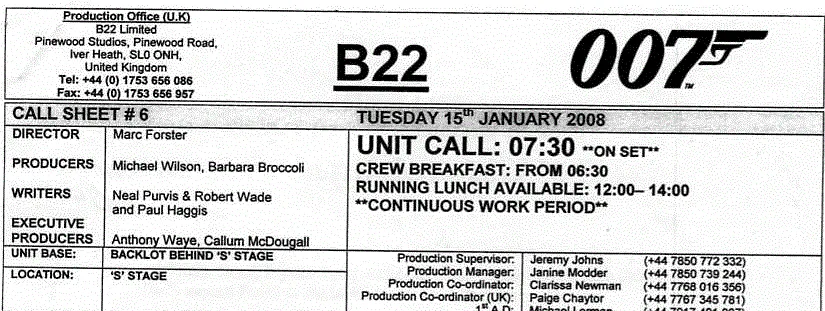
The top of the call sheet tells people exactly what production they are working on, which shoot day it is, the general call, and which core contacts can solve problems fast. On a small production that usually means the 1st AD, 2nd AD, producer, or UPM. If the most important phone numbers are buried halfway down the page, the sheet is already working against you.
Special notes belong near the top too, but only when they matter to most of the crew. Gate codes, a hard load-in rule, a safety reminder, or a location quirk deserves that real estate. Ten minor reminders do not.
- ▸Show the production title, shoot date, and day-out-of-days clearly.
- ▸List the people who can answer urgent crew and talent questions.
- ▸Use the announcement area only for details that change how the day runs.
Make the schedule line easy to scan at a glance
Most crew members open a call sheet looking for one thing first: what the day actually looks like. Your schedule area should show scene numbers, location, cast needs, and any break, move, or timing pressure that changes the rhythm of the shoot.
Talent times need even more care. If an actor needs wardrobe, hair, makeup, transport, or a pickup, build enough margin into those timestamps that one small delay does not push the first shot off the rails. A call sheet should reduce panic, not create it.
Field note · talent timing
Padding a cast call by a few practical minutes is usually cheaper than resetting the whole morning because the first scene cannot go on time.

Handle the logistical details before they turn into texts
Parking, map links, base camp notes, weather, sunrise and sunset, nearby emergency care, and company-move instructions are not filler. They are the details that keep people from improvising their own version of the day.
This matters even more on small shoots, where one wrong turn or one missing parking note can take the person you need off the grid right when load-in starts. If the location is unusual, spell it out plainly instead of assuming everyone will figure it out from the address.
- ▸Include the actual parking plan, not just the shoot address.
- ▸Link to maps when the crew will be reading on their phones.
- ▸List the nearest real 24-hour ER rather than a generic hospital name.
Treat naming and distribution like production work, not admin cleanup
Version confusion causes avoidable damage. Use one naming pattern for the whole project so everyone can tell the template from the live day file and the latest PDF from yesterday's attachment. A clean file name with the project, shoot day, version, and timestamp is usually enough.
Send one call sheet per shoot day. Multi-day sheets look efficient until the plan changes and half the crew starts following the wrong page. Export a mobile-friendly file, keep the final version easy to forward, and make sure the email tells recipients what is attached and what changed.
Before distribution
- ▢One final PDF for one shoot day only
- ▢File name shows project, day, version, and timestamp
- ▢Email explains the attachment and any major change from the prior version
- ▢Maps, sides, or parking references are attached only when needed
Proof it, get signoff, then confirm it landed
A call sheet should pass through department and production eyes before it goes out. That is how you catch the missing cast member, the wrong meal time, the outdated parking lot, or the hospital that is not actually a 24-hour ER.
Once the sheet is sent, do not assume everyone saw it. Track who received it, follow up with the people who matter most, and lock the latest version so the crew is not guessing which attachment is final.
- ▸Ask key department heads to sanity-check details that affect them directly.
- ▸Proof names, call times, scene numbers, and map links one last time.
- ▸Confirm receipt instead of assuming the email solved the problem.
Frequently asked
What should always be on a film call sheet?
At minimum include the production name, shoot date, day number, general call, contact leads, schedule details, cast needs, location and parking instructions, weather, and emergency information.
Who usually makes the call sheet?
On most productions the 2nd AD prepares it and the 1st AD, producer, or production office reviews it before distribution. On small shoots the producer or AD may handle the whole process.
When should a call sheet go out?
Usually the night before, once the schedule is real enough that people can trust the details. Sending too early creates version confusion, and sending too late leaves no room to catch mistakes.
Should one call sheet cover multiple shoot days?
Usually no. A single-day call sheet is easier to follow and much safer when schedules, weather, or locations change overnight.