
The quick answer
Track parts, story, and structure as the shoot moves so small overages show up before they turn into end-of-week surprises.
Every narrative feels unique—different characters, distinct worlds, varying stakes. Yet beneath those surface differences lies a shared skeleton. Writers, directors, and producers all depend on a foundational structure to shape how events unfold and give them meaning. When those components align, the story resonates.
But on a low-budget shoot, that alignment doesn’t happen by accident. It happens when you track your narrative beats alongside your daily schedule, location notes, and budget lines in real time. Scattering story structure across isolated files only guarantees that small overages will snowball into end-of-week crises.
Understanding the five structural parts of a story isn’t just for script analysis. It’s a practical framework for coordinating a tight shoot, anticipating pacing shifts, and keeping your cast and crew aligned from first call to final wrap.
The fastest production documents are the ones nobody has to explain twice.
Watch the workflow
Screenwriting for Low Budget | Making an Indie Feature Film
How do you write a compelling script on a limited budget? In this episode of Making an Indie Feature Film, Rachel Noll James, ...
Mapping the Five Structural Beats to Your Production Workflow
Most stories, regardless of genre, follow a recognizable five-part architecture. When you know exactly where each structural beat falls, you can translate creative intent into logistical action. This breakdown shows how classical story structure maps directly to on-set priorities, helping you spot friction before it derails the day.
From Freytag’s Pyramid to the Daily Call Sheet
Classical storytelling often references Freytag’s pyramid—a five-stage model tracing exposition through resolution. Modern filmmakers frequently expand this into a seven-stage arc to better track tension buildup, peak, and release. These aren’t rigid formulas; they’re diagnostic lenses.
When a scene drags or a sequence feels disjointed, the issue usually lives in one of these stages. The goal isn’t to rigidly label every moment, but to understand what each stage requires from your schedule, crew, and budget. Once you see the pattern, you can plan around it.
Exposition: Locking Down the “Normal World” Before Day One
The opening act establishes the baseline. Audiences need this stability to care when disruption hits. On screen, good exposition reveals world rules through behavior, not exposition dumps. Off screen, this translates to preparation.
You must define the “normal” state of your shoot environment before rolling. If your location permits, equipment rentals, or parking logistics aren’t locked down, the foundation cracks. Over-explaining in the script is a common pitfall, but under-planning in production is far more expensive.
- ▸Verify location access windows match the script’s timeline.
- ▸Confirm actor availability aligns with the established baseline scenes.
- ▸Document environmental constraints (light, noise, parking) early.
The Inciting Incident: Triggering the First Major Handoff
This is the moment the status quo breaks. In narrative terms, it raises the central conflict. In production terms, it’s where your first major workflow shift occurs. Whether it’s a location change, a new department head stepping in, or a shift in shooting priorities, the inciting incident demands clear communication.
Diagnostic question: Do we understand what "normal" looks like before it changes? If your team can’t answer that quickly, pause and clarify before rolling camera.
Rising Action: Escalation Demands Tighter Tracking
Rising action isn’t just “more stuff happening. ” It’s deliberate escalation. Each subsequent event should raise stakes, complicate logistics, or tighten the schedule. As narrative tension climbs, your production tracking must do the same.
Small overages in transport, catering, or equipment rentals become visible long before they wreck the week. Align your daily spend logs with the rising action of your schedule, so financial drift never outpaces creative momentum.
- ▸Track escalating costs against the corresponding beat in the shooting schedule.
- ▸Flag any department that exceeds its daily allotment before wrap.
- ▸Cross-reference location fees, meal penalties, and overtime hours in one view.
Converting Structure into a Working Day Plan
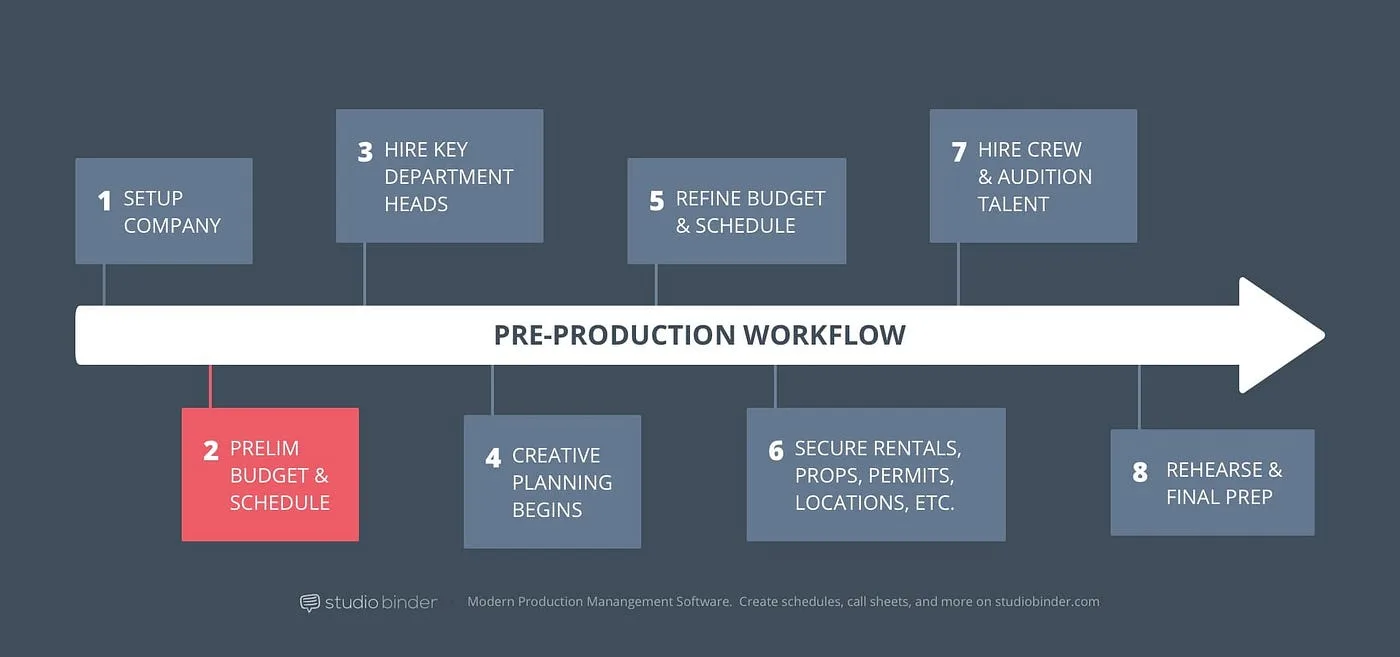
A structural outline only matters if your coordinator can translate it into call times, pickups, approvals, and handoffs. Before distributing any plan, run it against your actual shoot day. Compare the narrative beats against your contact sheet, location notes, transport routing, and meal breaks.
If a single line requires a department head to guess what it means, rewrite it before the sun comes up. Precision at this stage prevents costly reshoots and keeps the team moving efficiently.
- ▸Match every scheduled block to a specific narrative function.
- ▸Assign a single owner for each time-sensitive decision point.
- ▸Strip out placeholder fields that hide missing approvals or confirmations.
The Final Pass: Reading the Plan Through Crew Eyes
The ultimate test of your production document isn’t formatting—it’s readability under pressure. A tired grip or exhausted actor needs plain language, not industry jargon or assumed knowledge. Scan your plan from call time through wrap.
Do the parking notes match the location sheet? Do the emergency contacts align with the day’s shooting spots? Keep one master version live so no one works from outdated drafts. Clean structure on paper means clean execution on set.
- ▸Walk through the full schedule as if you’re hitting your first mark.
- ▸Verify that all cross-references (times, places, contacts) are consistent.
- ▸Archive the final approved version to eliminate version-control chaos.
Frequently asked
How does understanding story structure prevent production overages?
Narrative beats dictate scene length, location complexity, and actor requirements. When you map those beats to your daily schedule, you can anticipate resource needs ahead of time. Catching a misaligned location change or an extra hour of rental before it happens keeps your budget intact.
Why should financial tracking mirror the narrative arc?
Just as tension rises in the second half of a film, logistical complexity and costs typically escalate during principal photography. Aligning your spend logs with the story’s rising action ensures that budget reviews happen at the right moments, rather than after the damage is already done.
What’s the most common mistake low-budget teams make when planning shoots?
Treating the script as purely creative and the schedule as purely administrative. When these two operate in separate silos, small details—like permit windows, meal penalties, or equipment returns—slip through the cracks. Merging structure with workflow catches those gaps early.