
The quick answer
Track comedy, tragedy, and masks as the shoot moves so small overages show up before they turn into end-of-week surprises.
One moves toward resolution and renewal. The other moves toward irreversible loss and catharsis. Every piece of dramatic storytelling sits somewhere between these two poles. Understanding the comedy and tragedy masks meaning, origin, and symbolism reveals how ancient performance traditions still shape the way we categorize human experience today.
Comedy and tragedy are the two foundational forms of Western drama. Their roots stretch back to the religious festivals of ancient Greece, where choral performances honored Dionysus, the god of wine, ecstasy, and theatre. Actors wore exaggerated facial coverings to project emotion across vast stone amphitheatres, turning archetypes into lasting visual shorthand.
Today, those paired masks have transcended the stage. They appear in school auditoriums, university literature departments, and entertainment logos worldwide. But beneath the familiar smile and frown lies a rich history of ritual, narrative structure, and cultural evolution worth unpacking.
The fastest production documents are the ones nobody has to explain twice.
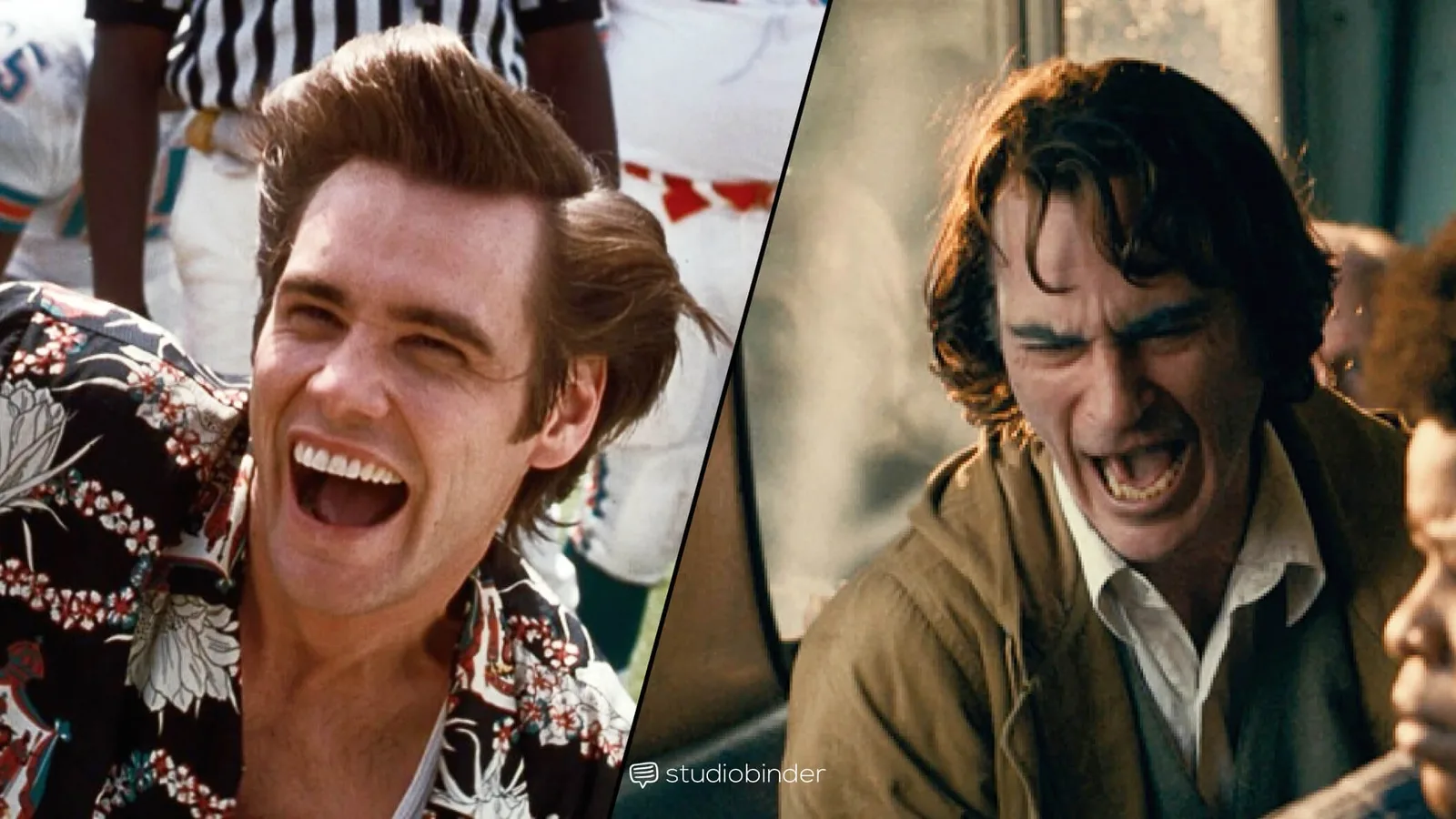
Watch the workflow
Unmasking the Comedy and Tragedy Masks
From Ancient Greece to modern stages, the iconic masks of comedy and tragedy have symbolized the power of theatre for ...
From Religious Ritual to Stage Tradition
The story begins in fifth-century BCE Athens, where theatre emerged not as entertainment but as civic and religious duty. Performances were staged during the City Dionysia, a festival dedicated to Dionysus. Playwrights competed by presenting trilogies that often paired three tragedies with one satyr play, blurring the lines between solemn reflection and lighthearted mockery.
Early actors wore simple leather or linen masks that covered the entire head. These weren't just costume pieces; they were acoustic tools. The slightly open mouth of each mask acted as a natural megaphone, projecting the performer's voice to thousands of spectators seated in steep stone tiers. Over time, the designs grew more elaborate, cementing the visual language of joy and sorrow that would define Western storytelling for millennia.
Structure Over Surface Emotion
Comedy is often mistaken for mere humour, but it is fundamentally a dramatic form built on structure rather than punchlines. A comedic narrative typically begins with confusion, deception, or social disorder. Characters misread situations, identities blur, and relationships strain under pressure. Yet the architecture of comedy always pushes toward resolution. Misunderstandings unravel, truths surface, and order is restored—often symbolized by weddings, reconciliations, or communal celebrations.
Tragedy follows a different trajectory. It moves toward irreversible loss, usually triggered by a protagonist's fatal flaw or hubris. The stakes are personal and societal, and the outcome cannot be undone. Where comedy releases tension through laughter and reconciliation, tragedy processes it through catharsis—a purging of pity and fear that leaves the audience emotionally cleared but intellectually unsettled.
How Classical Theory Shaped the Divide
Aristotle's Poetics remains the earliest surviving work of dramatic theory, and it draws sharp distinctions between the two forms. While his analysis of tragedy is highly detailed—outlining elements like plot unity, hamartia (error in judgment), and peripeteia (reversal)—his treatment of comedy is fragmentary. Nevertheless, he recognized both as imitations of human action, differing primarily in their moral valuation and narrative outcomes.
For Aristotle, tragedy dealt with characters of higher status whose downfall evokes profound empathy and intellectual reflection. Comedy focused on ordinary or flawed individuals whose mistakes lead to embarrassment rather than ruin. This classical framework established a binary that playwrights, directors, and audiences would reference, adapt, and occasionally subvert for over two thousand years.
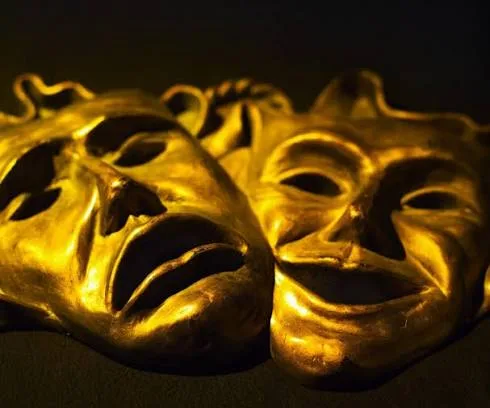
From Greek Amphitheatres to Global Symbols
As Greek theatre influenced Roman culture, the masks adapted alongside it. Roman playwrights like Plautus and Terence leaned heavily into stock characters and slapstick timing, while Seneca pushed tragedy toward psychological intensity and supernatural elements. During the Italian Renaissance, commedia dell'arte troupes popularized masked improvisation, embedding regional dialects, exaggerated gestures, and recurring archetypes like Harlequin and Pantalone into European performance culture.
By the nineteenth and twentieth centuries, the physical masks had largely fallen out of regular stage use, replaced by realistic acting and cinematic close-ups. Yet the symbolic pairing endured. Art deco architects placed them above theatre facades. Publishers used them for literary anthologies. Film studios adopted them as shorthand for dramatic range. The masks survived the decline of physical performance by becoming something else entirely: universal icons.
Why We Still Use Them Today
In contemporary design, the comedy and tragedy masks meaning has shifted from practical stagecraft to cultural metaphor. They now represent the full spectrum of human experience, acknowledging that joy and sorrow are interdependent rather than opposing forces. Educational institutions display them to signal a commitment to the humanities, while creative industries use them to denote versatility and emotional depth.
The persistence of these symbols speaks to a fundamental truth: storytelling thrives on contrast. Audiences don't seek pure escapism or unrelenting despair; they seek balance. The masks endure because they visually capture that balance, reminding us that every narrative worth telling navigates the space between laughter and tears.
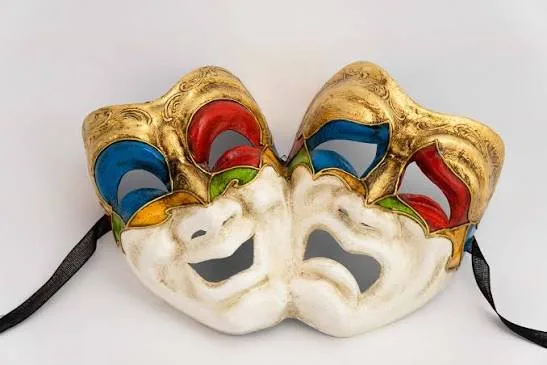
Applying the Concepts to Analysis and Creation
Understanding these forms helps both creators and critics navigate stories more intentionally. When analyzing a script, ask whether the narrative structure leans toward resolution or irreversible consequence. Look for how conflict is introduced, escalated, and ultimately resolved. Does the work release tension through reconciliation, or does it leave the audience with lingering questions about cause and effect?
For writers and directors, recognizing the underlying architecture prevents genre confusion. A story can blend comedic timing with tragic weight, but the structural trajectory must remain consistent. If the premise promises resolution, avoid undermining it with arbitrary setbacks. If it promises catastrophe, resist the urge to soften the ending with convenient escapes. Clarity of form strengthens emotional impact.
Frequently asked
What is the main point behind the comedy and tragedy masks meaning and symbolism?
The paired masks symbolize the dual nature of human experience and dramatic storytelling. They represent how narratives balance resolution and renewal against loss and consequence, serving as a visual shorthand for the full spectrum of emotional truth.
Where did the comedy and tragedy masks originate?
They originated in ancient Greek theatre during the fifth century BCE, specifically at festivals honoring Dionysus. Actors wore them to project their voices and amplify facial expressions across large outdoor amphitheatres.
Is comedy simply about being funny, and tragedy about being sad?
No. Both are structured dramatic forms. Comedy relies on mistaken identities, social disruption, and eventual resolution, while tragedy focuses on irreversible consequences, character flaws, and emotional catharsis. Humour and sorrow are surface elements; structure defines the forms.
Why do schools, theatres, and media still use these masks today?
They function as enduring cultural symbols that communicate artistic range, literary tradition, and the interconnectedness of joy and sorrow. Their simplicity makes them instantly recognizable, allowing them to transcend language and era.